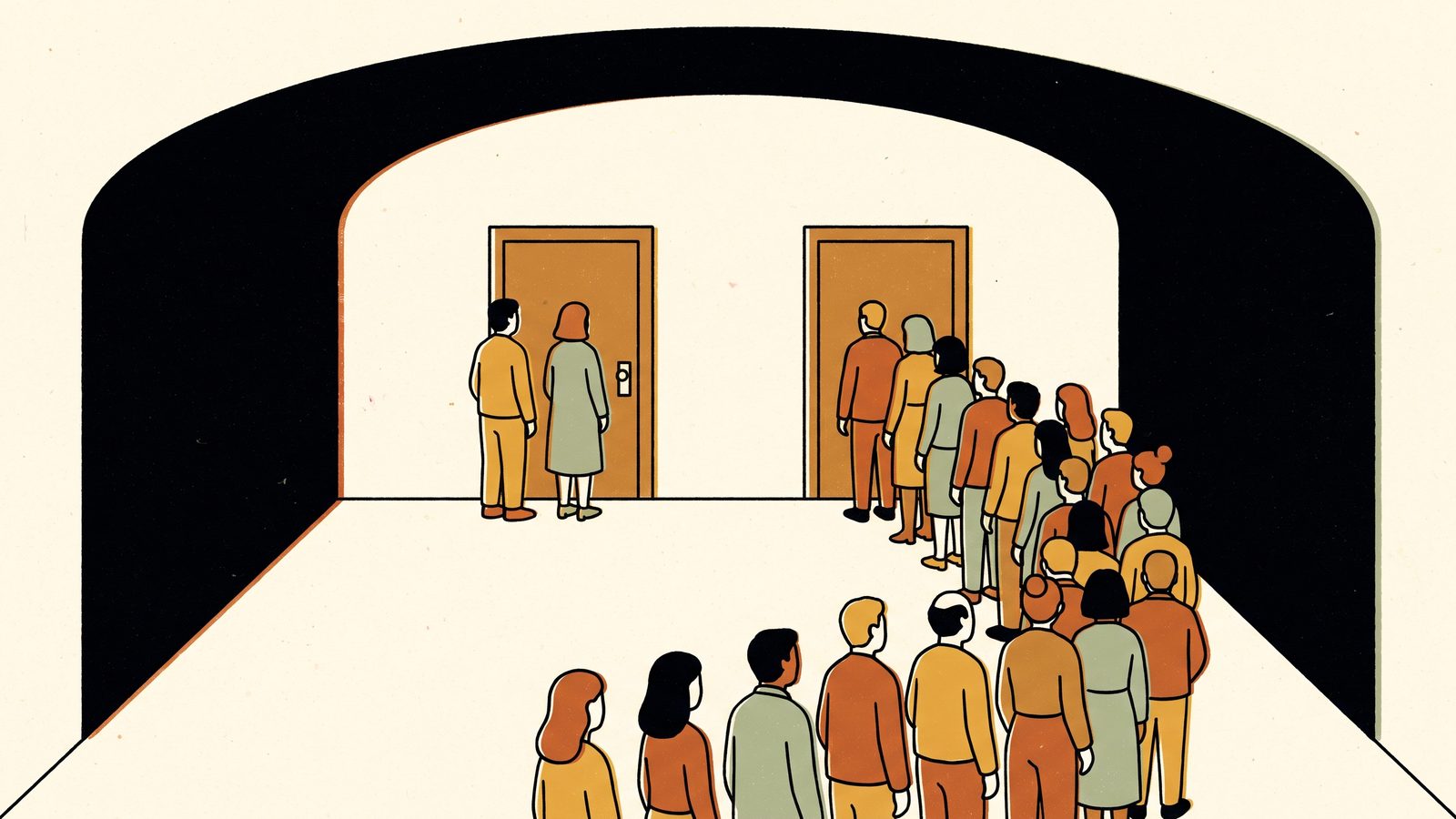
What parity actually requires
The federal Mental Health Parity and Addiction Equity Act says a plan that covers mental health and substance use care must do so on terms no more restrictive than it applies to medical and surgical care. New York’s insurance law requires consistency with that federal act and then adds requirements of its own.
The comparison runs across four dimensions, and it is worth naming them because a plan usually fails on one while looking fine on the others.
Financial requirements. Deductibles, copays, coinsurance, out-of-pocket maximums.
Treatment limits you can count. Visit caps, day limits.
Treatment limits you cannot count. Prior authorization, step therapy, concurrent review, medical necessity standards, how narrowly a network is built. These are where most real violations live, because they are invisible in a benefits summary.
The network itself. A directory that produces appointments for medical care and dead ends for therapy is a parity problem, not bad luck.
The New York additions, in usable form
Getting the answer in writing is the point. If the plan complies, you have saved yourself money or a delay. If it does not, you now have the document a complaint needs.
Who is covered by the New York rules
Yes: plans regulated by New York. Individual marketplace plans, small group plans, and fully insured employer plans, meaning your employer buys insurance rather than paying claims itself.
No: self-funded employer plans, where the employer pays claims from its own funds and hires an insurer to administer them. These are governed by federal law, so the federal parity act applies but the New York additions do not, and the state cannot enforce for you. Roughly speaking, the larger the employer, the more likely the plan is self-funded. Ask HR directly: “Is our health plan fully insured or self-funded?”
Separately: Medicaid and Medicare have their own frameworks and their own appeal routes. For Medicaid, the fair hearing is the backstop.
What a parity violation looks like in real life
Most people never file, because a violation does not arrive labelled. It arrives as an inconvenience.
A higher copay for therapy than for a doctor’s visit. The most common one, and the easiest to check: look at your own summary of benefits, compare the two lines.
Approval required for therapy but not for physical therapy. Different rules for comparable services in the same plan.
A visit limit that only exists on the mental health side. “Six sessions then we reassess,” with no equivalent on the medical side.
Reimbursement so low out of network that nobody joins. The reason a directory is thin is often the fee schedule behind it.
A directory nobody answers. Document it. How to build that log.
Where to complain, and which office to pick
The choice depends on what kind of plan you have, and picking right saves weeks.
| Situation | Office | Contact |
|---|---|---|
| Fully insured New York plan, marketplace plan, small group | Department of Financial Services | 800-342-3736 |
| Any New York plan, and you want a consumer advocate on it | Attorney General, Health Care Bureau Helpline | 800-428-9071, plus an online complaint form |
| Self-funded employer plan | US Department of Labor | 866-444-3272 |
| A denial you want overturned for yourself | Plan’s internal appeal, then external appeal | The appeal route |
A complaint and an appeal are different tools, and doing both is normal. An appeal fixes your case. A complaint fixes the rule, and it is the one that reaches an insurer that has to certify its parity compliance to the state every year.
What to put in the complaint
Short, dated, and specific beats long and angry every time.
- Your plan name and member ID, and whether the plan is fully insured or self-funded if you know.
- The rule you think is being broken, in one sentence, using the word parity.
- The comparison. “The plan charges me $60 for a therapy visit at a licensed clinic and $25 for a primary care visit.” That single sentence does more work than three paragraphs.
- The paper. Denial letters, the benefits summary page, screenshots of the portal, your call log with dates.
- What you want. Reprocessing at the correct cost sharing, removal of an authorization requirement, an accurate directory.
Questions people ask
What is mental health parity in plain terms?
A rule that a health plan may not make mental health and substance use care harder or more expensive to get than comparable medical care, in cost, in limits, in approval rules and in network access.
Does New York have stronger rules than federal law?
Yes. Outpatient mental health cost sharing at a licensed facility may not exceed the primary care copay, preauthorization is barred for outpatient addiction treatment at an OASAS-certified in-network facility, and medications for substance use disorder on the state list must be available without prior authorization.
My therapy copay is higher than my doctor copay. Is that a violation?
For outpatient treatment at a state-licensed facility, New York says it may not exceed the primary care copay. Ask the plan in writing, and if the answer does not change, complain.
Does parity apply to my employer plan?
The federal act does. The New York additions apply only if the plan is fully insured. Ask HR whether the plan is fully insured or self-funded.
Are autism and ADHD included?
Yes, both are named explicitly in New York’s behavioral health parity requirements.
Should I appeal or complain?
Both. The appeal fixes your claim, the complaint fixes the practice. They go to different places and neither blocks the other.
Sources
- New York Attorney General — behavioral health parity laws (checked 2026-09-08)
- NYS Office of Mental Health — parity laws (checked 2026-09-08)
- NYS Department of Financial Services — MH/SUD parity reporting and certification (checked 2026-09-08)
More in Mental Health Coverage in New York: What Your Plan Owes You
- Finding a Therapist Who Takes Your Insurance in New York — Plan directories for mental health are wrong more often than they are right. The method that works: how to build a call list, what to ask in twelve seconds, and the four routes people forget.
- Therapy on Medicaid in New York: What Is Covered and How HARP Works — New York Medicaid covers mental health and substance use treatment, and for adults with heavier needs there is a separate plan type called HARP that you do not apply for. How both work.
- 988 and Mobile Crisis Teams in New York: What Happens, and What It Costs — 988 is free, does not ask for insurance, and works by phone, text or chat. What actually happens when you contact it in New York, when a mobile crisis team comes instead, and what any of it costs.
This page explains how the system works. It is not medical advice. More.